
In fact, spreadsheets remain one of the most common ways investors track dividend income today.
The question isn't whether spreadsheets work. They do.
The question is whether they remain the best solution as a portfolio grows.
Let's compare both approaches.
Why So Many Dividend Investors Use Spreadsheets
Spreadsheets offer something investors love: control.
You can customize calculations, organize holdings however you like, and create exactly the views you want.
For investors with a handful of dividend positions, spreadsheets are often more than sufficient. Many investors use them successfully for years.
Common spreadsheet uses include tracking holdings, calculating annual income, monitoring dividend increases, estimating portfolio yield, and recording payment history.
For basic dividend tracking, spreadsheets can be highly effective.
Where Spreadsheets Begin to Get Complicated
The challenge isn't building the spreadsheet. The challenge is maintaining it.
Every portfolio changes over time. New positions are added. Existing holdings are sold. Share counts change. Dividends increase. Occasionally dividends are reduced.
Each change requires manual updates. As the number of holdings grows, so does the amount of maintenance.
A spreadsheet that once took a few minutes per month to manage can gradually become a larger project.
The Hidden Cost: Time
Most investors don't think about the cost of maintaining their tracking system. They think about the cost of software.
But time has value too.
Every month spent updating formulas, adjusting share counts, tracking payment schedules, reviewing dividend announcements, and verifying calculations is time that could be spent evaluating investments, planning income, or simply enjoying retirement.
For some investors, the spreadsheet remains worth the effort. For others, it becomes increasingly difficult to justify.
The Biggest Limitation: Visibility
This is where spreadsheets often struggle.
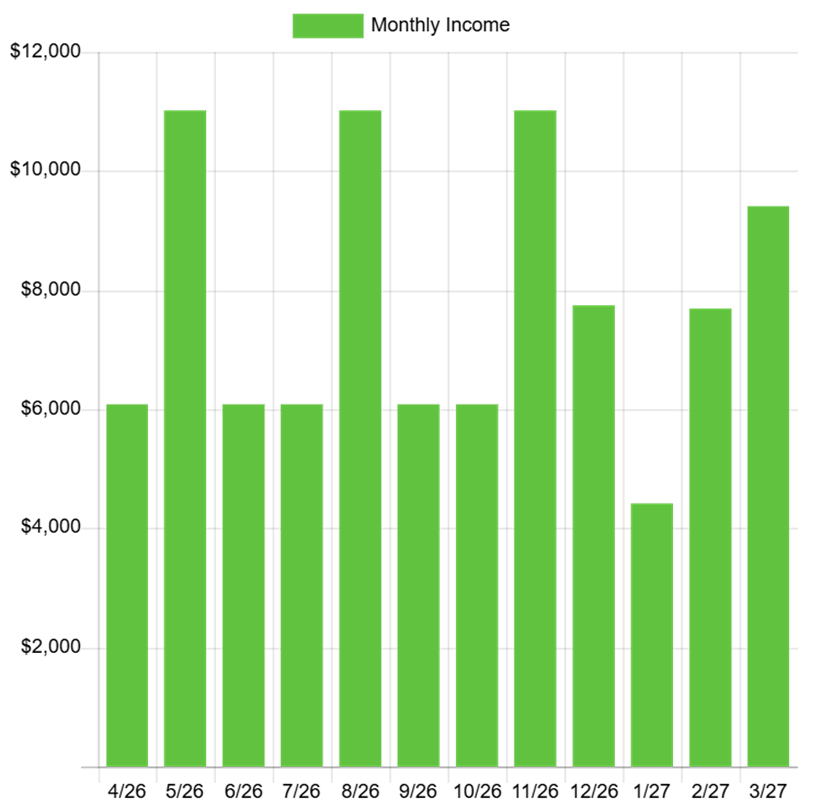
Most spreadsheets are excellent at showing annual totals. They're often less effective at helping investors understand which months produce the most income, where income may be lighter, which holdings generate the most cash flow, how income is distributed throughout the year, and upcoming dividend events.
The information can certainly be built into a spreadsheet. But doing so usually requires additional work and complexity.
How Dividend Trackers Differ
Dividend trackers are designed specifically for income investors.
Instead of building and maintaining formulas manually, the software organizes information automatically.
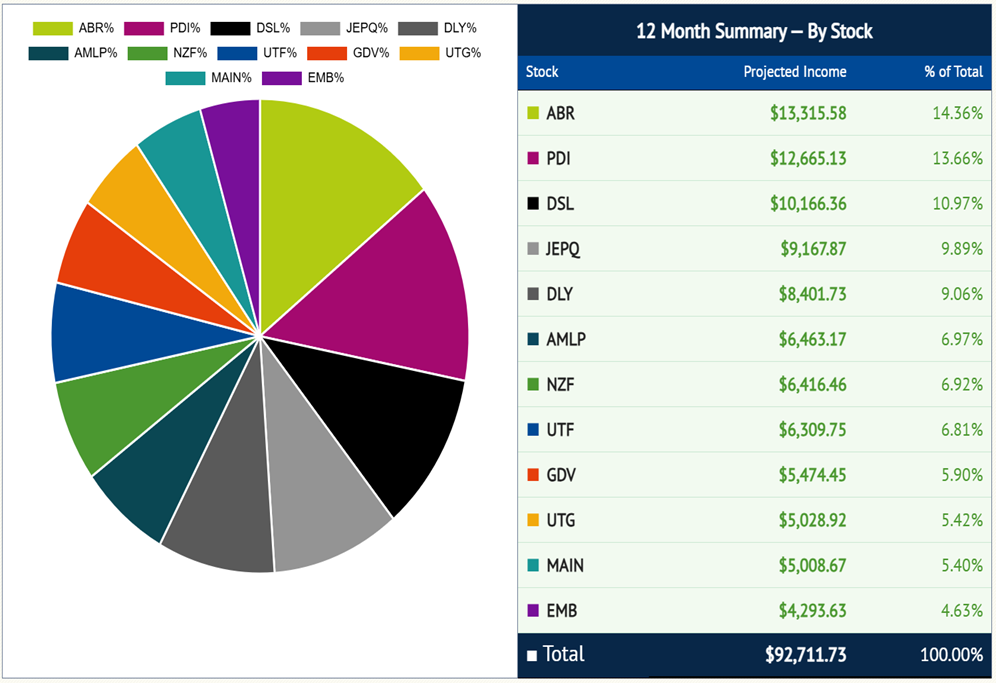
Most dividend tracking tools focus on future income projections, monthly income views, income by holding, dividend payment schedules, and portfolio organization.
The objective is not necessarily to provide information you couldn't create yourself. The objective is to make that information easier to access and maintain.
Which Approach Is Better?
A Spreadsheet May Be Better If:
- You enjoy building and maintaining spreadsheets
- You have a relatively small portfolio
- You prefer maximum customization
- You don't mind manual updates
A Dividend Tracker May Be Better If:
- You want to spend less time maintaining calculations
- You own numerous income-producing positions
- You want visibility into future income
- You prefer automation and convenience
- You rely on portfolio income for retirement planning
Neither approach is inherently right or wrong. The best choice is the one that helps you stay organized while giving you the information you need.
Many Investors Eventually Use Both
An interesting reality is that many experienced dividend investors continue using spreadsheets even after adopting tracking software.
Why? Because the two tools often serve different purposes.
Spreadsheets may remain useful for analysis, planning, and recordkeeping. Dividend trackers often become the primary tool for monitoring projected income and dividend activity.
For many investors, it's not an either-or decision. It's a combination of both.
Key Takeaways
- Spreadsheets remain a powerful dividend tracking tool.
- The challenge is often maintenance rather than calculation.
- As portfolios grow, manual tracking becomes more time-consuming.
- Dividend trackers focus on organization, visibility, and automation.
- Many investors ultimately use both approaches together.